
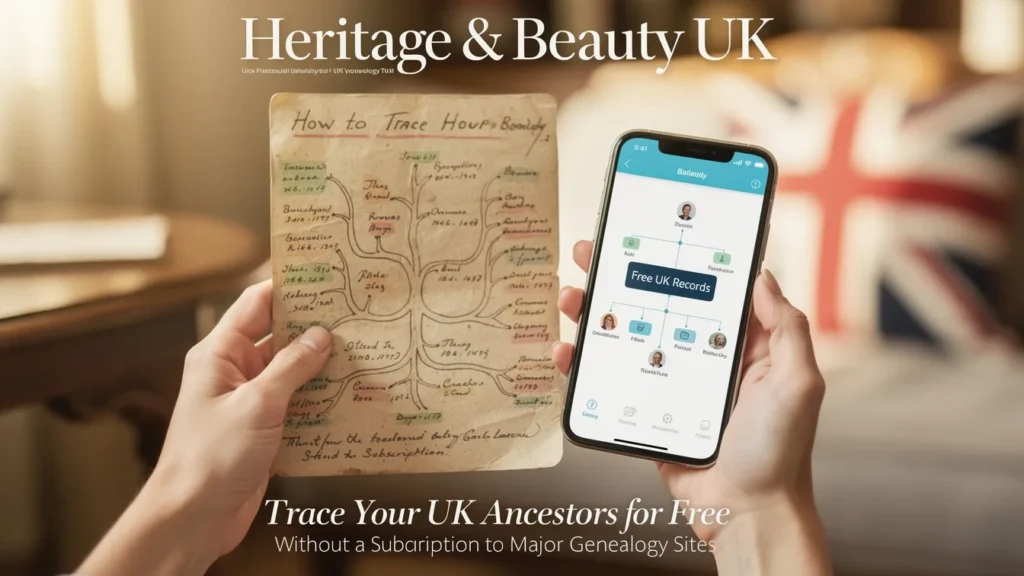

Have you ever wondered about your ancestry? That thread connecting you to a rich tapestry of history? Tracing your UK ancestors doesn’t have to cost a fortune. With the wealth of free genealogy resources available, there’s a world of genealogical exploration waiting to be discovered—no credit card required. Let’s unravel the past together as we explore how you can build your family tree without the constraints of paid subscriptions.
Highlights
- 💻 Top Free Websites: Discover the best resources for tracing your ancestry!
- 📜 Key Records: Learn which historical documents are essential for your search.
- 🔎 Practical Tips: Get actionable advice to streamline your genealogy research.
- 🌍 Historical Context: Understand the significance of UK census records and archives.
Did you know? As of 2026, over 30 million family trees have been created on various genealogy sites!
Understanding UK Genealogy Resources
Finding your roots can start with a simple search online. The incredible variety of family history websites available can make it challenging to choose where to begin. But don’t feel overwhelmed—start by bookmarking some pivotal sites and delve into the wealth of data they offer.
Major free websites include:
- FamilySearch: Your go-to for an extensive collection of historical records.
- FreeBMD: Excellent for finding English and Welsh birth, marriage, and death records.
- FreeCEN: Provides transcribed census data for England, Wales, and Scotland, giving insight into family dynamics at various points in time.
- IrishGenealogy: A treasure for anyone searching for Irish heritage, offering free access to civil and church records.
Building Your Family Tree
Once you’ve identified the key websites, it’s time to roll up your sleeves and get to work. I remember when I first attempted to trace my ancestors. It was like piecing together a gigantic puzzle—satisfying but sometimes frustrating. However, using these resources made the process enjoyable and fulfilling.
Here are some practical tips to consider while building your family tree:
- 🖋️ Jot Down What You Know: Start with a simple notebook or an online tool to document names, dates, and stories.
- 🌱 Use Online Tree Builders: Websites like FamilySearch and Ancestry support building a family tree. Even if the initial record search doesn’t yield immediate results, the inputs help create a visual representation of your family history.
- 📸 Incorporate Visuals: Upload photos and documents to enrich your narrative. They make the information more relatable and engaging.
The Power of Census Data
UK census records provide snapshots of family lives at various points in history. These vital sources can offer critical details like ages, occupations, and family relationships, making them an essential tool in genealogy research.
You must know that census data is not only about numbers; they tell stories. When I scrolled through my ancestors’ details, it was a moment of revelation. Seeing where they lived, what they did, and how many children they had gave life to the names I knew.
Key points to remember about census records:
- 📅 Regular Intervals: Censuses in the UK are conducted every ten years—keep a lookout for relevant years like 1841, 1851, and beyond!
- 🌆 Geographical Focus: Track changes in family locations over decades; migrations can uncover fascinating life stories.
- 📚 Historical Context: Pay attention to societal changes reflected in the data—wars, migrations, and economic shifts.
Uncovering Historical Archives
You might be surprised to find that many local and national archives are treasure troves of ancestral records. In addition to census records, they encompass a range of documents that can enrich your search, including parish registers, land records, and military service documents.
Speaking of archives, if you have the opportunity, a visit to the National Archives in Kew, London, can be an eye-opening experience. The tactile nature of sifting through historical materials is something transcribing from a screen can’t replicate. I remember finding my great-grandfather’s military enlistment papers, and it felt surreal to hold that piece of history.
Taking the Next Steps
It’s exciting to explore your heritage, and there’s a satisfaction that comes with uncovering layers of history. As you navigate through the vast landscape of free genealogy resources, remember that persistence is key. Leverage multiple sites to gather comprehensive data, and don’t shy away from seeking help in online forums or local history groups.
Feeling overwhelmed? Consider starting with just one ancestor at a time. It’s a marathon, not a sprint. And before you know it, you’ll be piecing together a rich tapestry of your history worth passing down to the next generation.
Engage, ask questions, and let your curiosity lead the way. There’s a world of history waiting for you to discover!
*Disclaimer: This article is for general informational purposes only and does not replace professional advice. Information may change over time.*